

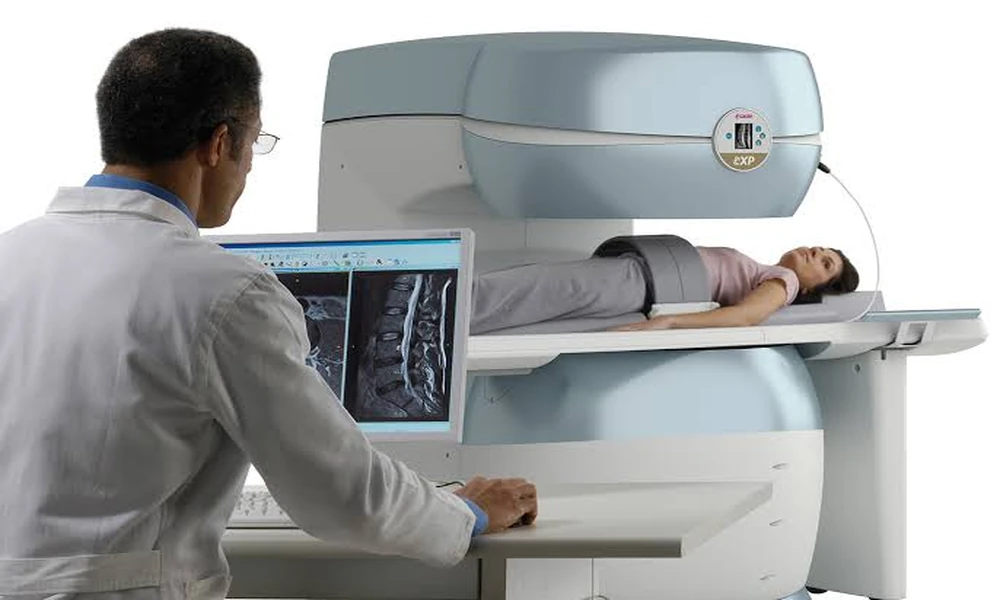
For a long time, the biggest barrier to getting an MRI was not the scan itself but the experience of having one. Lying still inside a narrow tube for thirty minutes or more is genuinely difficult for many patients, particularly those with anxiety or claustrophobia.
MRI technology has changed considerably over the past two decades specifically to address this problem, and understanding how gives patients who have avoided scans in the past a clearer picture of what their options actually look like today.
The Traditional MRI Experience and Why It Causes Anxiety
A standard closed MRI places the patient inside a narrow cylindrical tube, often just inches from their face and shoulders, for the full duration of the scan. For someone prone to claustrophobia, that confinement alone can trigger a panic response before the scan even begins.
The loud, repetitive banging noise produced by traditional MRI machines adds another layer of stress, and the inability to see out or easily communicate with staff during the scan can make an already uncomfortable situation feel worse.
The Shift Toward Open and Upright Scanner Designs
Manufacturers responded to this widespread problem by developing open and upright scanner designs. Upright MRI of Deerfield offers an open, upright, standup MRI experience that lets patients walk in and be scanned without ever entering a closed tube.
This kind of design change is not cosmetic. Being able to see the room, maintain eye contact with a technician or family member, and avoid the sensation of being enclosed removes the specific trigger that causes panic for many anxious patients.
Noise Reduction and Faster Scan Times
Alongside physical design changes, MRI manufacturers have also worked to reduce the noise that has historically made scans stressful. Newer systems run significantly quieter than the machines most patients remember from years past.
Advances in scanning technology have also shortened the time patients need to hold still, which matters directly for anxiety, since a shorter scan gives less time for discomfort to build and less opportunity for a patient to feel trapped.
Positioning Options That Support Comfort
Modern MRI systems can scan patients in a variety of positions, including standing, sitting, and semi-reclined, rather than requiring everyone to lie flat on a table. This flexibility lets a patient choose whatever position feels least restrictive.
Being able to bring a family member into the room, listen to music, or maintain visual contact with the outside environment throughout the scan are all small changes that, together, make a meaningful difference for someone who dreads the experience.
What This Means for Patients Who Have Avoided Scans Before
Patients who canceled or avoided an MRI in the past because of panic, claustrophobia, or a previous bad experience often assume every scan will feel the same way. That is no longer necessarily true given how much scanner design has changed.
A patient who needs imaging of the spine, shoulder or another joint now has access to scanner types built specifically around comfort, without sacrificing the image quality a physician needs for an accurate diagnosis.
Conclusion
MRI technology has moved a long way from the loud, enclosed tubes that made anxious patients dread the process. Open and upright designs, quieter systems, and flexible positioning have made the scan itself a much smaller obstacle than it used to be.
If anxiety or claustrophobia has kept you from getting a scan you need, talking with your doctor about an open, upright option is worth raising before assuming the traditional experience is your only choice.
