

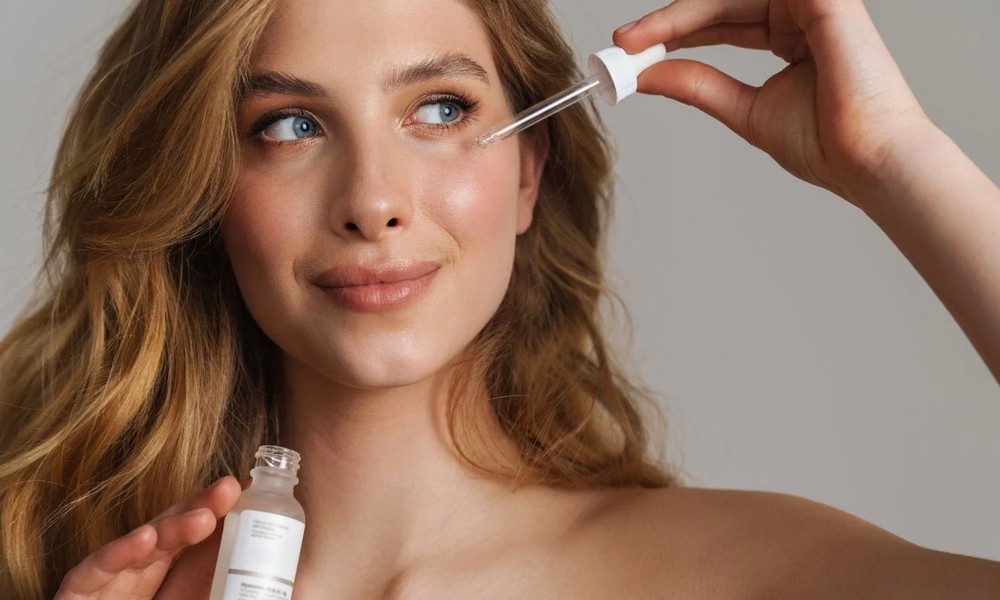
Skin gets tight by midday. Fine lines look worse when the air is dry. Sleep does not fix that dull, flat look that keeps showing up. These are not separate concerns. The skin is losing water faster than it can hold onto it, and that one problem sits underneath all of them. myaster carries multiple hyaluronic acid serum formulations because this ingredient solves a specific problem rather than a general one. Different skin needs call for different approaches to the same molecule.
What does it actually do?
The body already makes hyaluronic acid. It lives in joints, connective tissue, and throughout the dermis, where it keeps water molecules held close to skin cells. One gram binds roughly six litres of water. That is not advertising copy. It is measurable chemistry that explains why the molecule behaves the way it does.
Output slows as the decades pass. Mid-thirties are usually when it becomes visible. The slight fullness of the skin had started going earlier. It takes longer to bounce back after poor sleep or dehydration. A serum cannot restore what the deeper dermis has already lost. What it does is reduce how much water evaporates through the outer barrier, pulling moisture toward the surface layers and keeping it there longer. The tightness and dullness that come from that daily loss are both reduced with regular use.
Molecular weight matters
Labels rarely explain this, but it changes everything about what a serum actually delivers.
- High molecular weight – Forms a thin film at the skin surface, slowing evaporation.
- Low molecular weight – Travels into the skin, where it affects how skin looks and responds.
- Hydrolysed hyaluronic acid – Broken into the smallest fragments, goes deepest, holds effect longest inside the tissue.
- Multi-weight formulations – Hit all three levels in a single application rather than working on just one layer at a time.
When one molecular weight is used, one layer is addressed. Multi-weight covers the full range.
Application timing
Many people use this ingredient correctly, but at the wrong moment. Hyaluronic acid pulls moisture from its immediate surroundings. Air is not the nearest water source in a dry room. It is the skin beneath the surface. Applied that way, the result is tighter skin, not better-hydrated skin. Damp skin changes the outcome entirely. The serum provides something external for the molecule to draw from after cleansing. A moisturiser seals the moisture in before the serum dries. This three-step sequence is what makes the ingredient effective. Without the final occlusive layer, the moisture it attracts evaporates within an hour.
Layering with other activities
Hyaluronic acid does not fight with other ingredients. Vitamin C goes alongside it without issue. The retinoids, niacinamide, and exfoliating acids all work together. That compatibility is genuinely useful when building a multi-step routine. The retinoid pairing is worth knowing specifically. Surface dryness is common in the early weeks of retinoid use. Before or between retinoid applications, apply hyaluronic acid serum. This reduces tightness and flaking without touching how the retinoid performs at the deeper cellular level.
Skin that reacts to new products benefits from starting here before anything stronger enters the routine. The barrier stabilises. Tolerance improves. Actives introduced after that point tend to work better on skin that is properly hydrated than on skin already struggling with dryness.
