

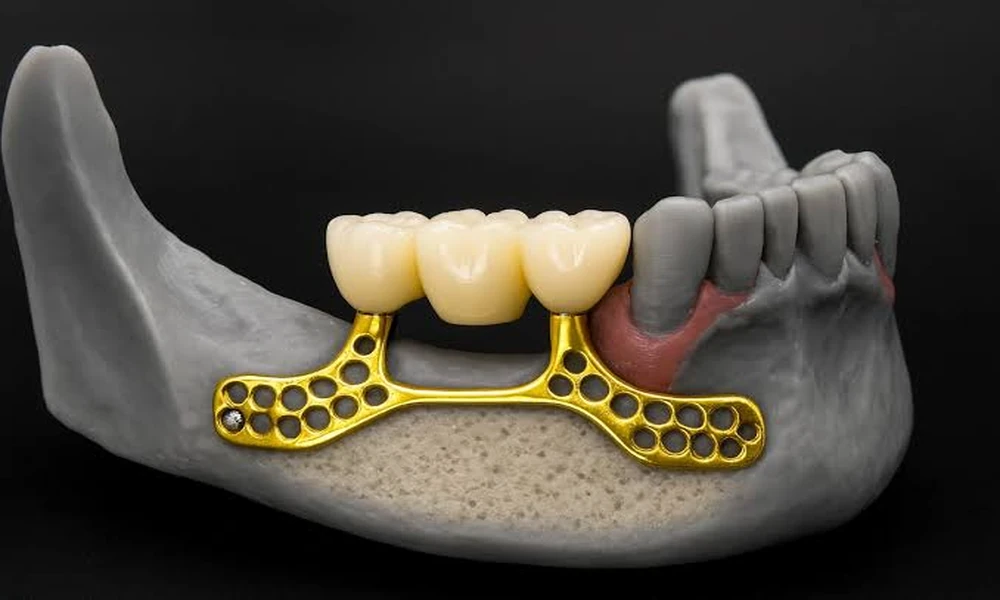
Ask two dentists to name the types of dental implants and you may get two different answers, because the field sorts them by where the implant anchors rather than by brand or shape. The three recognized categories are endosteal, subperiosteal, and zygomatic. Nearly everyone who gets an implant receives the first kind. The other two exist for patients whose jawbone cannot support a standard post, which is exactly the scenario implant-focused practices like Stubbs Dental evaluate with 3D imaging before recommending anything.
Here is what separates them, and which clinical situation each one answers.
What are the three types of dental implants?
Endosteal implants are placed into the jawbone. Subperiosteal implants rest on top of the bone, underneath the gum tissue. Zygomatic implants anchor into the cheekbone instead of the upper jaw. The American Academy of Implant Dentistry has historically described the first two as the primary categories, with zygomatic implants treated as a specialized third option for severe upper jaw bone loss.
Bone volume is the variable that decides which one applies to you.
What is an endosteal implant, and who is it for?
An endosteal implant is a threaded titanium post inserted directly into the jawbone, and it accounts for the overwhelming majority of implants placed today. Typical dimensions run 8 to 15 millimeters in length and 3 to 6 millimeters in width, chosen to match the bone available at the site.
Candidacy generally requires enough healthy bone to surround the post, often cited as roughly 10 millimeters of height and 6 millimeters of width for a standard-diameter implant, though narrower designs relax that. After placement, the bone grows against the surface over three to six months in a process called osseointegration. Once fused, an abutment connects the post to a crown, bridge, or denture.
Cost for a single endosteal implant with its crown usually falls between $3,000 and $6,000.
Mini implants are worth mentioning here since patients often hear the term and assume it is a fourth category. They are narrow endosteal implants under 3 millimeters wide, used mainly to stabilize a lower denture at lower cost, not a separate type.
What is a subperiosteal implant, and is it still used?
A subperiosteal implant is a custom metal framework that sits on the surface of the jawbone beneath the gum, with small posts protruding through the tissue to hold a prosthesis. It was designed for patients with too little bone height for an endosteal post and who could not or would not undergo grafting.
These are uncommon now. Bone grafting improved, endosteal designs got shorter and narrower, and zygomatic implants took over most of the severe cases. Long-term survival historically trailed endosteal implants, and older versions required two separate surgeries. Modern versions are designed with CAD/CAM software from a CT scan and printed as a single unit, which has revived interest somewhat, but they remain a niche solution offered by relatively few surgeons.
What is a zygomatic implant, and when is it necessary?
A zygomatic implant is an extra-long post that bypasses the upper jaw entirely and anchors into the zygoma, the cheekbone. Lengths range from about 30 to 52 millimeters, compared with 8 to 15 for a conventional implant. The technique was developed by Per-Ingvar Brånemark in the late 1980s for patients with severe maxillary atrophy.
The practical appeal is avoidance. A patient with a badly resorbed upper jaw would otherwise need sinus lifts and extensive grafting, adding six to twelve months and several thousand dollars before restoration can even begin. Zygomatic placement often allows a fixed temporary bridge the same day or within 48 hours. Published systematic reviews report survival rates in the mid to high 90s over ten years or more, though the surgery is technically demanding and carries sinus-related risks that require an experienced surgeon.
Expect full-arch zygomatic treatment to run meaningfully above standard full-arch pricing, frequently in the $30,000 to $50,000 range per arch.
Does the implant material matter as much as the type?
It matters, but it is a separate question. Nearly all implants are commercially pure titanium or a titanium alloy, which has decades of clinical data behind it. Zirconia implants, made from a tooth-colored ceramic, are the main alternative and appeal to patients with metal sensitivity or thin gum tissue where a gray shadow might show through. Zirconia is usually a one-piece design, which limits how the restoration can be angled, and its long-term evidence base is thinner.
How do you find out which type you need?
A cone beam CT scan, which is 3D imaging of the jaw, measures your actual bone height, width, and density. That scan, not a visual exam, determines whether a standard endosteal implant works or whether grafting or a zygomatic approach is on the table.
Bring that question to a consultation with a practice like Stubbs Dental that owns its imaging and places implants routinely, and ask them to show you the scan and explain what the measurements rule in or out.
