

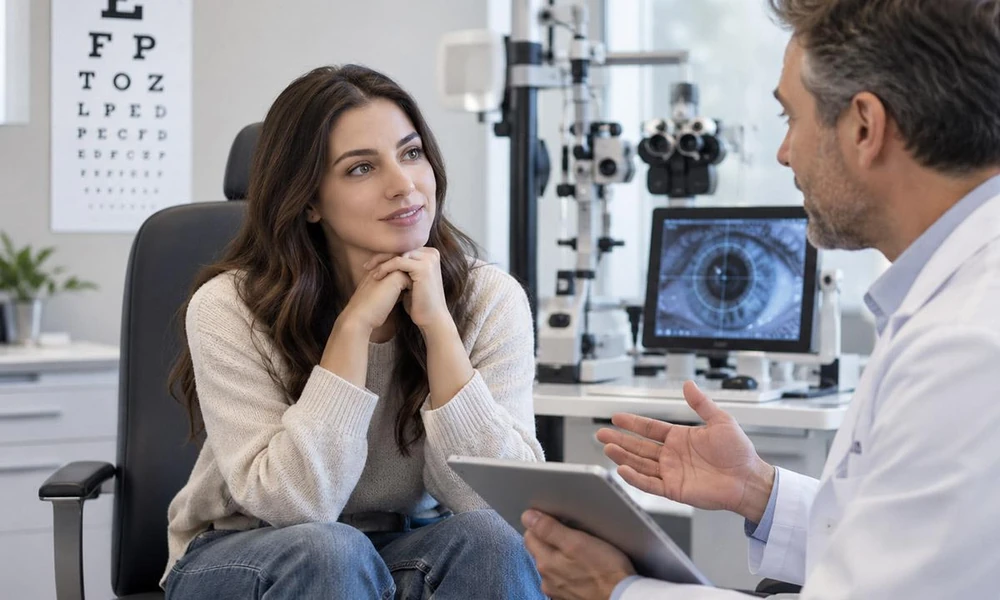
LASIK uses a laser to reshape the cornea and reduce your need for glasses or contacts. For residents of Fullerton, Brea, and nearby north OC cities, Anaheim Eye Institute is a short drive away, which helps because LASIK involves a consultation, surgery day, and several follow-ups. Good candidates are adults with stable prescriptions and healthy eyes. Many people see well within days, though full stabilization can take months. PRK or lens options exist when LASIK isn’t a fit.
Maybe you reach for your glasses before your feet hit the floor, or you’re fumbling with contacts before an early commute on the 57 and squinting at freeway signs on the 91 after dark. If you’ve started looking into LASIK Fullerton options, you probably have two big questions: is LASIK worth it for you, and is there an experienced practice close enough to make the visits easy?
For many North Orange County residents, the second answer is closer than you might think. Anaheim Eye Institute has cared for Orange County patients since 1958, when it opened as the county’s first multi-specialty ophthalmology practice. Its Anaheim office is a short drive from Fullerton, Brea, Placentia, Yorba Linda, La Habra, and Buena Park.
This guide covers what North OC patients usually want to know before booking a consultation. We’ll walk through getting to appointments, candidacy, safety research, recovery, cost, and alternatives if LASIK isn’t the right match for your eyes.
Getting to LASIK in Anaheim from Fullerton, Brea, and North OC
Anaheim Eye Institute is located at 1211 W La Palma Ave, Suite 201, in Anaheim, a short drive from most north Orange County cities. Measured city center to city center, Fullerton is roughly 3 miles away, Placentia about 5, Buena Park about 6, and Brea, La Habra, and Yorba Linda about 8, usually under 20 minutes outside of rush hour.
Why Proximity Matters for LASIK
LASIK isn’t a single appointment. According to the FDA’s guide to what happens before, during, and after LASIK, you’ll need a follow-up visit within 24 to 48 hours after surgery, followed by additional checkups as your eyes heal.
On surgery day, plan for someone to drive you home, and your care team will confirm the details. A short drive also makes that next-day visit easier for whoever is driving you.
Planning Your Visits
The office is open Monday through Friday, 8 a.m. to 5 p.m. If you wear contacts, the FDA advises stopping soft lenses about two weeks before your LASIK evaluation and toric soft or rigid gas-permeable lenses at least three weeks before. Ask for instructions that match your lenses when you book.
“For most north Orange County residents, a trusted LASIK consultation is a short drive, not a day trip.”
Are You a Good Candidate for LASIK in Fullerton and North OC?
Good LASIK candidates are generally adults whose prescription has been stable for at least a year, who have healthy corneas of adequate thickness, and who don’t have eye or health conditions that interfere with healing. A complete eye evaluation is the only way to confirm whether LASIK is right for you.
What Anaheim Eye Looks For
The page on LASIK surgery at Anaheim Eye Institute outlines general guidelines. They include a prescription that has been stable for at least one year and treatable ranges of up to -11.00 diopters of nearsightedness, +5.00 diopters of farsightedness, and 5.00 diopters of astigmatism. (A diopter is the unit that measures how strong a lens prescription is.)
Age is part of the picture too. FDA-approved lasers are for adults 18 and older, and Anaheim Eye prefers LASIK patients to be at least 21. The American Academy of Ophthalmology (AAO) likewise sets 18 as the minimum and describes over 21 as ideal.
When LASIK May Not Be the Right Choice
The FDA describes several situations where LASIK may not be a good idea. These include a recent change in prescription, pregnancy or breastfeeding, and conditions such as autoimmune disease or diabetes that can affect healing. People in contact sports like boxing, wrestling, or martial arts may also want to consider other options.
Screening can also turn up thin corneas, large pupils, dry eye, eyelid inflammation (blepharitis), a history of herpes infection in the eye, or glaucoma. You can read more about reasons you may not be eligible for LASIK and bring your questions to your consultation.
How Safe Is LASIK? What the FDA and AAO Data Show
The overall results are encouraging. According to the AAO, about 90% of patients end up with vision between 20/20 and 20/40 without glasses or contacts. That is a range, not a promise that every patient reaches 20/20.
Some of the most detailed patient-reported data comes from the FDA’s PROWL studies, published in JAMA Ophthalmology in 2017 and summarized by the AAO’s EyeNet magazine. Across 534 participants, only 1% to 4% were dissatisfied with their vision after surgery, and 1% to 2% were dissatisfied with the surgery itself.
The same research was candid about side effects. At three months, 43% of participants in one study and 46% in the other reported at least one new visual symptom, such as glare, halos, or starbursts. About 28% of people with no dry eye symptoms before surgery reported them at three months.
Most of those symptoms were mild, and satisfaction stayed high overall, but the numbers show why side effects deserve a clear discussion at every consultation. The AAO also lists rare but serious risks, including infection, overcorrection or undercorrection, and vision that ends up worse than before surgery.
In 2022, the FDA released draft guidance on LASIK patient labeling proposing easier-to-read information and a patient decision checklist. Whatever materials you receive, be sure to ask your surgeon to explain the risks that apply to your eyes.
“Most LASIK patients are satisfied with their results, and a thorough screening helps keep it that way.”
LASIK Recovery for Busy Fullerton and North OC Schedules
Many people notice clearer vision within a day or two after LASIK and return to light routines quickly, but the eyes still need protection while they heal. According to the FDA, it can take three to six months for vision to fully stabilize, and your surgeon will give you personal aftercare instructions to follow.
The First 48 Hours
Right after surgery, your eyes may burn, itch, or feel scratchy for a few hours, according to the AAO. You’ll likely wear an eye shield, especially while sleeping, to avoid rubbing your eyes. Your first follow-up typically happens within 24 to 48 hours, so clear your calendar for surgery day and the next morning.
The First Month
The FDA’s general timeline suggests waiting one to three days before non-contact sports and avoiding lotions, creams, and eye makeup for up to two weeks. Swimming pools and hot tubs usually take one to two months to wait, so it’s worth planning around if your Orange County summer means pool days. Contact sports typically wait at least four weeks.
Temporary dry eye and fluctuating vision are common during this stretch. The AAO notes these usually resolve within about a month. If they last longer or seem to be getting worse, let your eye doctor know.
What Affects LASIK Cost for Fullerton and North Orange County Patients
Anaheim Eye doesn’t publish LASIK prices online, and quotes elsewhere vary widely. The most accurate number comes from a consultation, but a few factors typically shape what you’ll pay.
Technology is one. Anaheim Eye offers blade-free LASIK using two lasers: the IntraLase femtosecond laser and the WaveLight Allegretto Wave Eye-Q excimer laser. What the quote includes, such as follow-up visits or possible enhancements, matters as much as the headline number.
Insurance is another factor. The FDA notes that most insurance plans don’t cover LASIK. However, IRS Publication 502 lists laser eye surgery to treat defective vision as an includible medical expense, so your HSA or FSA funds may be eligible. Confirm with your plan administrator before you schedule.
Anaheim Eye offers a free LASIK consultation, along with flexible financing options through CareCredit. The practice’s LASIK page mentions no-interest plans for up to 18 months, subject to credit approval. If PRK or a lens procedure is recommended instead, costs will differ.
LASIK vs. PRK and Other Options If LASIK Isn’t a Fit
If LASIK isn’t recommended, other vision correction options may be. PRK reshapes the cornea without creating a flap and can suit some thinner corneas or high-contact lifestyles. Lens-based options, such as an implantable lens or refractive lens exchange, may suit very high prescriptions or older eyes.
PRK: A Flap-Free Alternative
With PRK, the surgeon removes the thin outer surface layer of the cornea and reshapes the tissue underneath, with no flap. A clinical review from StatPearls notes that PRK is often considered for thin corneas (typically under 500 microns) and for people in the military, police, firefighting, or contact sports. The surface layer usually heals in about three to five days under a bandage contact lens.
The tradeoff is slower recovery, with vision improving over weeks and discomfort that can last up to two weeks, according to Anaheim Eye’s PRK page. In return, the cornea stays structurally stronger.
Implantable Lenses and Refractive Lens Exchange
Anaheim Eye also lists a phakic intraocular lens (an implant placed in front of your natural lens) as a LASIK alternative, which may be considered for prescriptions outside the laser range. For adults generally in their 40s or older who are starting to see natural lens changes, refractive lens exchange replaces the eye’s natural lens with an artificial one.
Taking the Next Step Toward LASIK From North OC
If you live in Fullerton, Brea, or elsewhere in north Orange County, an established LASIK practice doesn’t have to mean a long drive. The most important steps come before surgery: a careful candidacy evaluation, a clear talk about risks, and a realistic picture of recovery and cost. If LASIK isn’t the best fit, PRK or refractive lens exchange may still help you rely less on glasses and contacts.
Have questions about your vision or are you ready to explore your options? The team at Anaheim Eye Institute has been helping Orange County patients see clearly since 1958. A LASIK consultation is a simple way to find out where you stand.
Book an Appointment or call 714.533.2020.
Medical disclaimer: This article is for informational purposes only and is not a substitute for professional medical advice. Please consult your eye doctor for a personal diagnosis or treatment recommendation.
Frequently Asked Questions
How far is Anaheim Eye Institute from Fullerton and Brea?
The Anaheim office of the Anaheim Eye Institute is roughly 3 miles from Fullerton and about 8 miles from Brea, measured from city center to city center. Most North Orange County patients can get there in under 20 minutes outside rush hour, depending on traffic.
How many appointments does LASIK require, and do I need a driver?
LASIK typically involves a consultation, surgery day, a follow-up within 24 to 48 hours, and later checkups while your eyes heal. Plan for someone to drive you home after surgery, and your care team will confirm your schedule.
What is the minimum age for LASIK?
FDA-approved lasers are for adults 18 and older, and Anaheim Eye prefers LASIK patients to be at least 21. The American Academy of Ophthalmology also describes over 21 as ideal. A stable prescription for at least one year is another key requirement.
Does insurance cover LASIK, and can I use my HSA or FSA?
Most insurance plans don’t cover LASIK, according to the FDA. IRS Publication 502 lists laser eye surgery as an includible medical expense, so HSA or FSA funds may be eligible. Confirm with your plan administrator.
What if I’m not a candidate for LASIK?
Not qualifying for LASIK doesn’t always rule out vision correction. PRK, which reshapes the cornea without a flap, may suit some thinner corneas or high-contact lifestyles. A phakic intraocular lens or refractive lens exchange may also be discussed after a complete eye evaluation.
